





Ludwig Cancer Research is an international community of distinguished scientists dedicated to preventing and controlling cancer. American businessman Daniel K. Ludwig began to support cancer research with the establishment of the Ludwig Institute for Cancer Research in 1971. Today, the scientific efforts endowed through his resources have grown to encompass the Ludwig Institute and the Ludwig Centers and professorships at six U.S. institutions.

Leadership

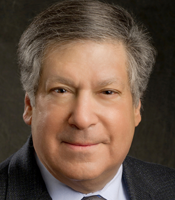
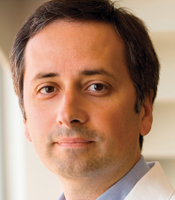
Board of Directors

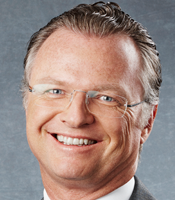
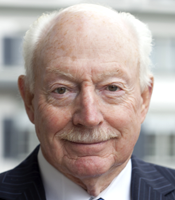
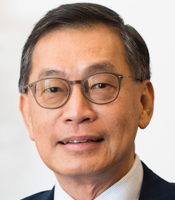
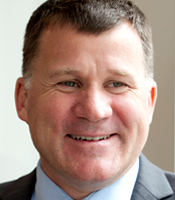
A Board of Directors has the ultimate responsibility for the Ludwig Institute for Cancer Research and the Ludwig Fund. Although they are separate Boards, the members are the same. Several board members also served as trustees of the Virginia and D.K. Ludwig Fund for Cancer Research, which oversaw the endowment of the six Ludwig Centers in the United States.

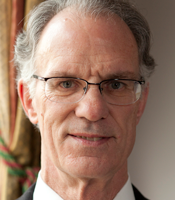
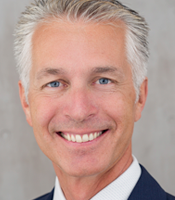
Edward A. McDermott Jr.
Chairman of the Board
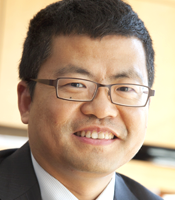
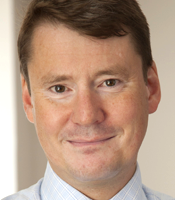
Xing Chen, CFA
President/Chief Investment Officer, LICR Fund Inc.
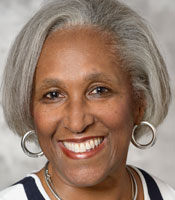
Nancy E. Davidson, MD
Fred Hutchinson Cancer Research Center
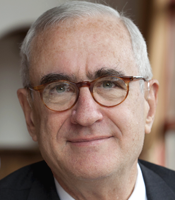
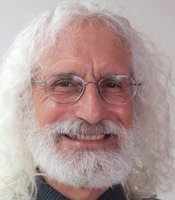
John D. Gordan III
Law firm of Morgan, Lewis & Bockius (retired)
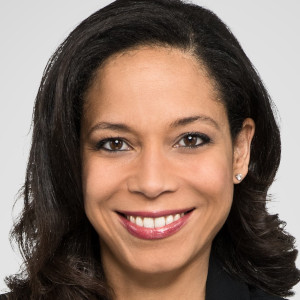
Alexandra Johnson
Pestalozzi Attorneys at Law
Barbara S. Jones
Law firm of Bracewell LLP
Nicolas Killen
Law firm of Borel & Barbey
John L. Notter
Board Member, Conrad N. Hilton Foundation
Jedd Wolchok, MD, PhD
Weill Cornell Medicine
Chi Van Dang, MD, PhD
CEO and Scientific Director
Scientific Advisory Committee

The Scientific Advisory Committee is a group of distinguished independent scientists and clinicians appointed by the Scientific Director of the Ludwig Institute to advise on emerging areas of cancer research and development that might help the Institute fulfill its mission. The group also assists in the scholarly review of Institute scientists.

History

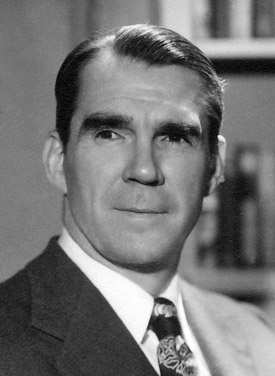
Daniel K. Ludwig was born June 24, 1897, in South Haven, Michigan, USA. By the 1960s he was among the richest men in the world, with a self-made empire of some 200 companies. By the time of his death, he had pioneered the modern supertanker, participated in major oil and gas projects throughout the world, become a major investor and operator in the production of coal and other minerals, acquired and developed luxury hotels and other real estates, and developed a forest-products and agricultural enterprise that encompassed three million acres in the Amazon basin.

In 1971, he launched the Ludwig Institute for Cancer Research (he had to be persuaded strongly to allow his name to be used), endowing it with nearly all of his international holdings. That endowment is managed by the LICR Fund.

Upon his death in August 1992, Mr. Ludwig’s estate also provided for cancer research support at six leading U.S. academic institutions.

READ DANIEL LUDWIG’S FOUNDING STATEMENT

How we’re organized

The Ludwig Institute for Cancer Research Ltd is an international not-for-profit organization with a legacy of pioneering cancer discoveries that spans more than 50 years. The Institute provides its scientists with the resources and the flexibility to realize the life-changing potential of their work and see their discoveries advance human health. This philosophy, combined with robust translational programs, maximizes the potential of breakthrough discoveries to be more attractive for commercial development.

The Ludwig Institute conducts its own research and clinical trials, bridging the most basic questions of life to the most pressing needs of cancer care. Since its inception, the Institute has invested more than $1.8 billion of its own resources in cancer research, and has an endowment valued at $1.5 billion.

In addition, Ludwig Centers and Ludwig professorships have been established at six leading U.S. institutions. The Centers, created in 2006, operate independently of the Ludwig Institute but work collaboratively with each other and with the Institute at the forefront of cancer research. Each Center has a secure level of funding that generates more than $2 million a year in perpetuity. This funding empowers the Centers to attract the best and brightest scientists and provides unconstrained resources to tackle the most challenging projects for the benefit of cancer patients.

Funding

The LICR Fund

The LICR Fund Inc. is a US 501(c)3 organization that manages the assets of the Ludwig Institute for Cancer Research.

The LICR Fund’s investment goal is to provide sustainable core spending for the Ludwig Institute while maintaining the purchasing power of the Fund for future generations of scientists. The Fund, valued currently at $1.5 billion, is overseen by a Board of Directors, which determines investment policy and objectives, defines guidelines for the allocation of assets and—together with the Institute’s Investment Office—appoints and evaluates outside investment managers.

The Fund’s orientation is global and broadly diversified, with an investment portfolio incorporating a range of asset classes and strategies designed to achieve its risk-adjusted objectives.

The Virginia and D.K. Ludwig Fund

The Virginia and D.K. Ludwig Fund for Cancer Research endowed the Ludwig Centers under the terms of the will of Daniel Ludwig. Each Center is endowed, providing generous and secure funding for the indefinite future.

Careers

Ludwig is always hungry for creative scientific minds and brilliant people to help further our mission. Check this space regularly for the latest job openings at our locations around the world.

Investment Analyst
New York HQ

About Ludwig Institute for Cancer Research and LICR Fund

Ludwig Cancer Research is an international community of distinguished scientists dedicated to preventing and controlling cancer. American businessman Daniel K. Ludwig began to support cancer research with the establishment of the Ludwig Institute for Cancer Research in 1971. Today, the scientific efforts endowed through his resources have grown to encompass the Ludwig Institute and the Ludwig Centers at six U.S. institutions, all pursuing breakthroughs to alter the course of cancer.

LICR Fund Inc. manages the endowment assets of the Ludwig Institute for Cancer Research. The Fund’s investment goal is to provide for sustainable core spending for the Ludwig Institute while maintaining the purchasing power of the Fund for future generations of scientists. The Fund’s orientation is global and broadly diversified, with an investment portfolio incorporating a range of asset classes and strategies designed to achieve its risk-adjusted objectives.
Primary Objectives and Goals

The Investment Analyst is an integral part of the investment team, providing support for investment and strategy decisions. The Investment Analyst will work with the Chief Investment Officer and senior investment staff to monitor and research investments across multiple asset classes.

The Investment Analyst position provides an excellent opportunity to gain exposure to investments across a range of asset classes, including public equity, hedge funds, private equity, and fixed income.

Responsibilities Include

• Assist senior investment staff in evaluating investment opportunities
• Assist in the preparation of quarterly portfolio and market reviews; evaluate LICR’s existing fund managers
• Maintain manager exposure and attribution spreadsheets; present findings to investment team
• Maintain proprietary research database; collect, classify and organize investment manager and markets data
• Monitor and report on portfolio liquidity and cash flow forecasts
• Analyze markets and investment trends both domestically and abroad;
• Monitor current market conditions to help assess relative attractiveness of investment opportunities
• Drive standardization and efficiency of internal processes
• Attend investment manager meetings; write and maintain meeting notes
• Complete special projects as deemed appropriate
• Assist in the preparation of presentations to the Investment Committee
• Professionally represent LICR at manager meetings, conferences and industry events

Professional Experience/Background

The ideal candidate is a self-starter and a hard worker who can work independently as well as collaboratively. The candidate should possess intense intellectual curiosity as well as the desire to work on behalf of a mission-based organization.

A minimum of a bachelor’s degree along with 1-3 years professional work experience is required. All undergraduate fields of study will be considered.

Competencies should include:

• Well-developed quantitative and analytical skills
• Strong proficiency in Microsoft Office Suite
• Strong attention to detail
• Exceptional interpersonal and presentation skills
• Collegial, collaborative mindset
• High degree of individual initiative and proven ability to meet deadlines
• Willingness to travel both domestically and internationally

This position is in-person in New York City. Please note that the analyst program is meant to be a 2-3 year position, after which candidates will be expected to move on to graduate school or to another role.

The annual gross salary range is expected to be $110,000 to $140,000. The position is eligible for an additional discretionary bonus.

How to Apply:

Interested candidates should submit a cover letter explaining their interest and qualifications along with a resume to investmentjobs@lcr.org.   Review of applications will begin immediately and continue until the position is filled.


Go To New York HQ Page    

See Full Job Posting    

Assistant, Associate or Full Professor
Princeton

Princeton University seeks applications for an assistant, associate or full professor to contribute to a major new initiative at the interface between cancer, immunity, and metabolism (Ludwig Princeton Branch). We welcome applications from candidates using biological, chemical, physical, engineering and/or computational approaches to tackle questions at this interface.  https://puwebp.princeton.edu/AcadHire/apply/application.xhtml?listingId=31161

Go To Princeton Page    

See Full Job Posting    

Postdoctoral Research Associate – AI/Machine Learning for Chemistry
Princeton

The Skinnider Lab at Princeton University aims to recruit between 1 to 3 postdoctoral or more senior research positions to work on projects related to machine-learning for mass spectrometry-based metabolomics data. https://puwebp.princeton.edu/AcadHire/apply/application.xhtml?listingId=31201 

Go To Princeton Page    

See Full Job Posting    

Founding statement

In creating this organization I have been guided by certain principles which throughout my life I have found to be highly effective. Success in any complex enterprise consists in bringing the best minds to bear on each problem, in providing the best resources possible, and in putting each concept into practice whenever and wherever the opportunities are most favorable. I believe firmly in the value of applying these principles in grappling with tasks as momentous as finding ways to relieve the human suffering caused by cancer.

Why should this undertaking be international? The rare vision and ability needed in the battle against cancer are not limited by frontiers, and the scientists who possess these gifts must be sought wherever they are to be found. Nor does cancer reveal itself in the same guise in every nation, but strikes different populations in different forms. Yet despite the growing necessity for concerted worldwide effort, I find no agency, which has both the truly international scope and the substantial resources, which I deem essential for a comprehensive attack on human cancer.

In my judgment the ultimate conquest of this frightful disease is not yet in sight, and the same view is held by most informed physicians and scientists in bio-medical research. In contrast to those who would yield to undue optimism, and who hope for too much from present programs. I am persuaded that eventual mastery of cancer will come only from intense and unremitting scientific exploration over many decades. This should not be hindered by the changing policies of governments and the vagaries of public interest. Accordingly it is my intention that the Institute shall be so structured as to ensure secure and continuing support for the attainment of its aims. The elimination of cancer will surely rank as one of man’s greatest and uncontroversial achievements. That day may be long delayed. How long we cannot tell. But I do not doubt that it will surely come.

D.K. Ludwig
December 17, 1974

Notice
?

You are now leaving Ludwig Cancer Research's website and are going to a website that is not operated by the association. We are not responsible for the content or availability of linked sites. Do you wish to continue?

Continue
Cancel